
Conquering Valley Summits Before Heat Closures
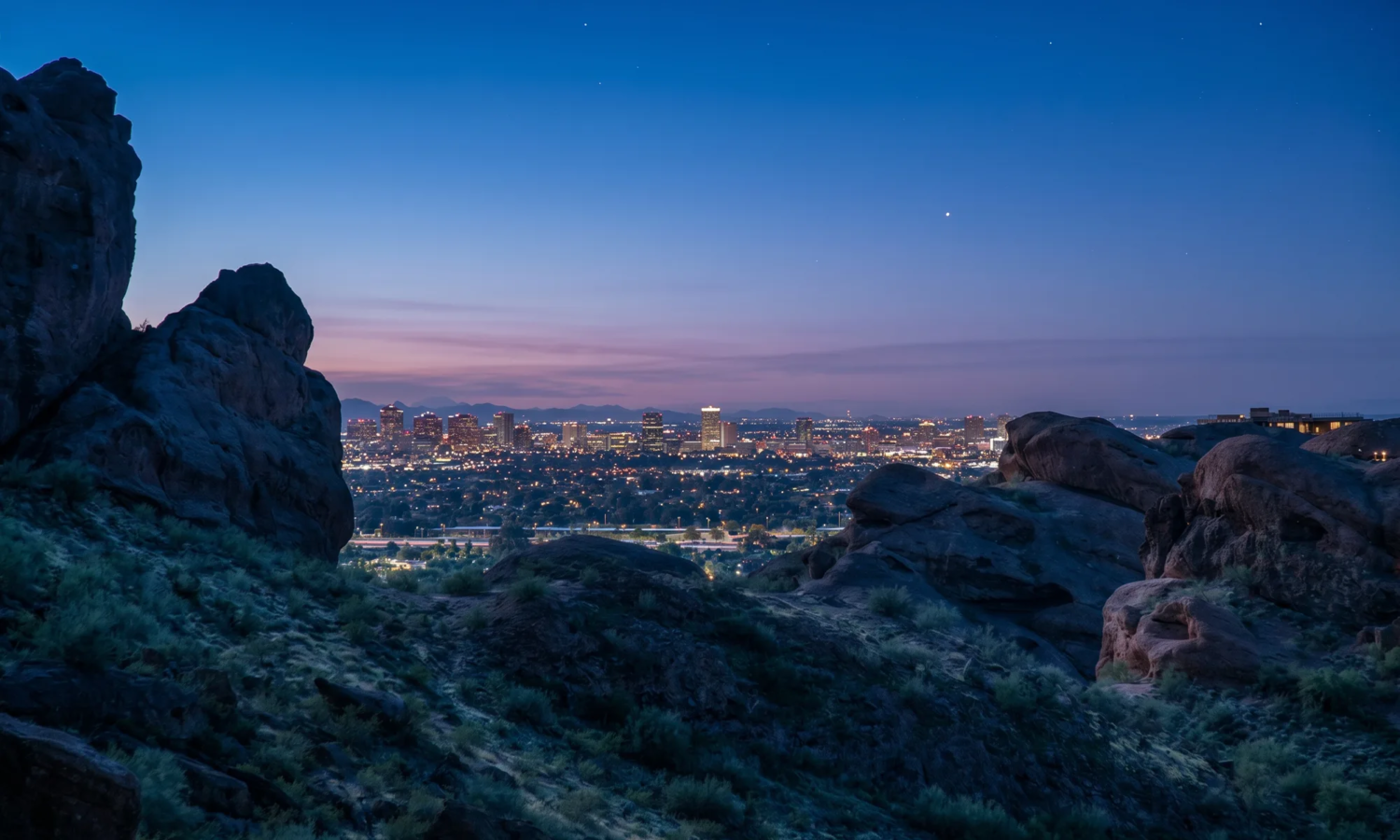
Pre-dawn view of Downtown Phoenix from a hiking trail at Camelback Mountain
by Allison McKnight
Pre-Dawn Peak: Conquering Valley Summits Before the Heat Closures
May 1, 2026
The arrival of May brings a beautiful yet demanding shift to the landscape of Phoenix sports and fitness. For local trail runners, mountaineers, and outdoor endurance athletes, our world-class urban peaks—specifically Camelback Mountain and Piestewa Peak—have served as premier training grounds all winter. However, as the thermometer begins its inevitable climb toward the triple-digit mark, the window for safe, high-intensity outdoor conditioning shrinks drastically. The luxury of relaxed, mid-morning weekend hikes is officially over, replaced by a season that demands absolute military precision, strict timing, and a deep respect for the desert climate.
Conquering the Valley’s steep, rocky summits during late spring is no longer just about personal physical endurance. It is an exercise in meticulous logistical planning. To protect both civilian hikers and emergency first responders from life-threatening thermal emergencies, municipal agencies enforce strict environmental boundaries across our mountain parks. For the modern athlete looking to maintain their peak vertical conditioning through May and June, mastering the pre-dawn hiking window is the only way to keep your outdoor training active, legal, and entirely safe.
Understanding the Legal Threshold: The 100-Degree Trail Ban
Operating safely within the urban trail system requires a clear understanding of hyper-local park ordinances. The Phoenix Parks and Recreation Department enforces a strict, legally mandated seasonal trail closure policy across its highest-risk summits. Specifically, whenever the National Weather Service issues an Excessive Heat Warning, the Echo Canyon Trail, the Cholla Trail on Camelback Mountain, and all summit trails at Piestewa Peak are automatically closed to all users between the hours of 11:00 AM and 5:00 PM.
Furthermore, even in the absence of an official county-wide warning, park rangers actively monitor localized trailhead thermometers. Once the ambient temperature at the base of these mountains reaches 100 degrees Fahrenheit, the summit gates are locked to prevent thermal shock and dehydration injuries. Violating these mandatory closures constitutes a Class One Misdemeanor under Phoenix City Code, carrying heavy financial penalties.
The physical reason for these strict regulations is simple: Camelback and Piestewa are intensely steep, exposed, unshaded rock structures. During late spring, the volcanic and granitic rock faces act as thermal sponges, absorbing solar radiation and radiating heat back onto hikers, creating an environment that can easily measure fifteen degrees hotter than the official regional air temperature.
Mastering the Pre-Dawn Window: Timing and Logistics
To beat both the scorching daytime heat and the park ranger closures, local athletes must adopt a nocturnal preparation mindset. The safest, most efficient training window during May and June exists exclusively between 4:30 AM and 7:00 AM. Arriving at the trailhead before the sun breaks over the eastern horizon allows you to complete the bulk of your steep vertical ascent while the mountain structures are at their coolest, having dumped their radiant heat into the night sky.
THE SUMMIT WINDOW (MAY/JUNE TIMEBOUNDS)
The Safe Training Window
4:30 AM to 7:00 AM
Lowest ambient air temps
Ample parking availability
The Danger Zone Window
9:00 AM to 7:30 PM
Extreme radiant heat absorption
High risk of neurological shock
Stepping onto the trail at 5:00 AM requires a specialized gear audit. While morning temperatures may feel relatively pleasant at the base, your body will generate immense metabolic heat during the climb. Wear lightweight, loose-fitting, light-colored synthetic apparel engineered specifically for moisture-wicking and rapid evaporative cooling. Completely avoid cotton fabrics, which trap sweat and cling to the skin, inhibiting your body’s natural ability to regulate its temperature.
Additionally, because you will be navigating technical, rocky terrain in the dim twilight of dawn, a lightweight, high-lumen headlamp is a must have asset. This tool keeps your hands completely free to scramble over the steep boulder fields of Echo Canyon while ensuring you retain clear visibility of loose gravel, unstable rock steps, and local nocturnal wildlife like rattlesnakes or scorpions transitioning back to their shaded burrows.
Sweat Mathematics: The High-Heat Hydration Blueprint
The most critical element of your pre-dawn summit plan is your hydration strategy, which must begin long before you arrive at the mountain park. Attempting to hydrate at the trailhead by chugging a bottle of water is an ineffective approach that frequently leads to gastrointestinal distress and cramping during steep climbs. True hydration is a multi-day process. In the forty-eight hours leading up to a heavy summit workout, athletes must continuously consume water paired with complex electrolytes to ensure cellular saturation.
As a baseline rule of thumb for desert training, you should consume a minimum of one liter of water for every hour you spend on the trail. For a standard trek up and down Camelback Mountain, this means carrying at least two to three liters of fluid.
Crucially, do not rely on plain water alone. Sweating heavily in a dry environment causes rapid depletion of essential minerals, specifically sodium, potassium, and magnesium. This depletion can trigger hyponatremia, a dangerous condition where blood sodium levels drop too low, causing confusion, muscle weakness, and sudden collapse.
To prevent this, utilize high-quality electrolyte replacement powders or tablets in your hydration bladders. Always carry a secondary, completely independent backup water supply in your vehicle, ensuring you can immediately rehydrate and flush your system with clean, cool fluid the moment you exit the trail.
Recognizing the Early Warning Signs of Heat Illness
Even with flawless preparation, the desert climate demands constant, vigilant self-awareness. When training at high intensity under a rising spring sun, the line between peak performance and a medical emergency can blur within minutes. Every athlete must be intimately familiar with the sequential stages of heat illness and be entirely willing to abandon a summit attempt if their body flashes warning signs.
The initial stage of distress typically manifests as heat cramps—painful, involuntary muscle spasms occurring in the calves, thighs, or abdomen, indicating acute fluid and mineral loss. If you experience cramping, stop immediately, seek whatever shade is available, and consume electrolyte-rich fluids.
Progressing past cramps leads directly to heat exhaustion, marked by heavy sweating, a rapid and weak pulse, dizziness, nausea, headaches, and a profound sense of sudden weakness. If heat exhaustion is ignored, the body’s internal cooling mechanisms will fail completely, resulting in heatstroke—a catastrophic medical emergency characterized by a lack of sweat, hot and dry red skin, confusion, loss of consciousness, and potential organ failure.
If you or your training partner exhibit any signs of heat exhaustion, drop your summit goals instantly, begin a controlled descent, and prioritize cooling down. Reclaiming your vertical conditioning during a Phoenix summer is a marathon, not a sprint. By respecting municipal closure laws, optimizing your early morning logistics, and listening explicitly to your body’s internal metrics, you can conquer the Valley’s toughest peaks safely and confidently all season long.


 Image By Robert Leßmann