
Beat the Heat with our Guide to Phoenix Summer Pet Safety
 Rick Rome
by Abi Rodriguez
photography by: Rick Rome
Sizzling Sidewalks and Shaded Sanctuaries
A Guide to Phoenix Summer Pet Care
July and August represent the absolute zenith of the desert summer. As the afternoon sun beats down on the Valley, daily life naturally shifts into climate-controlled indoor spaces. While humans can easily articulate their discomfort and adjust their clothing, our companion animals rely entirely on human intervention to navigate the extreme elements.
For pet owners across Maricopa County, this season demands much more than keeping water bowls filled. It requires a comprehensive, proactive understanding of how triple-digit temperatures physically impact our animals.
From the severe threat of thermal pavement burns to subtle behavioral changes indicating heat exhaustion, managing a pet in the desert requires specialized knowledge. Local animal welfare organizations, including the Arizona Humane Society, report that heat-related emergencies spike dramatically during these two months. By understanding the physiological limits of your dog or cat and executing simple environmental adjustments, you can ensure your pets remain happy, healthy, and safe until the autumn relief arrives.
The Invisible Burn: Demystifying Hot Pavement Dynamics
The single most frequent hazard facing urban dogs in Phoenix during July and August is hot pavement. Many well-meaning pet parents assume that if the air temperature feels tolerable during a late afternoon breeze, it is safe to take their dog for a quick walk around the block. This is a dangerous misconception. Materials like concrete, asphalt, and even artificial backyard turf act as thermal sponges, absorbing and retaining radiant heat from the sun. The surface temperature of a sidewalk can routinely measure 40 to 60 degrees hotter than the ambient outdoor air temperature.
When asphalt temperatures cross the 125-degree threshold, a dog’s sensitive paw pads can sustain severe, blistering thermal burns in less than one minute of continuous contact. To put this in perspective, an asphalt temperature of 135 degrees is hot enough to instantly fry an egg or cause second-degree human skin burns.
To prevent these traumatic injuries, Valley veterinarians advocate for the universal adoption of the Seven-Second Test. Before letting your dog step onto any outdoor surface, press the back of your bare hand firmly against the concrete or asphalt for seven consecutive seconds. If the heat forces you to pull your hand away before the timer is up, it is far too hot for your pet’s paws.
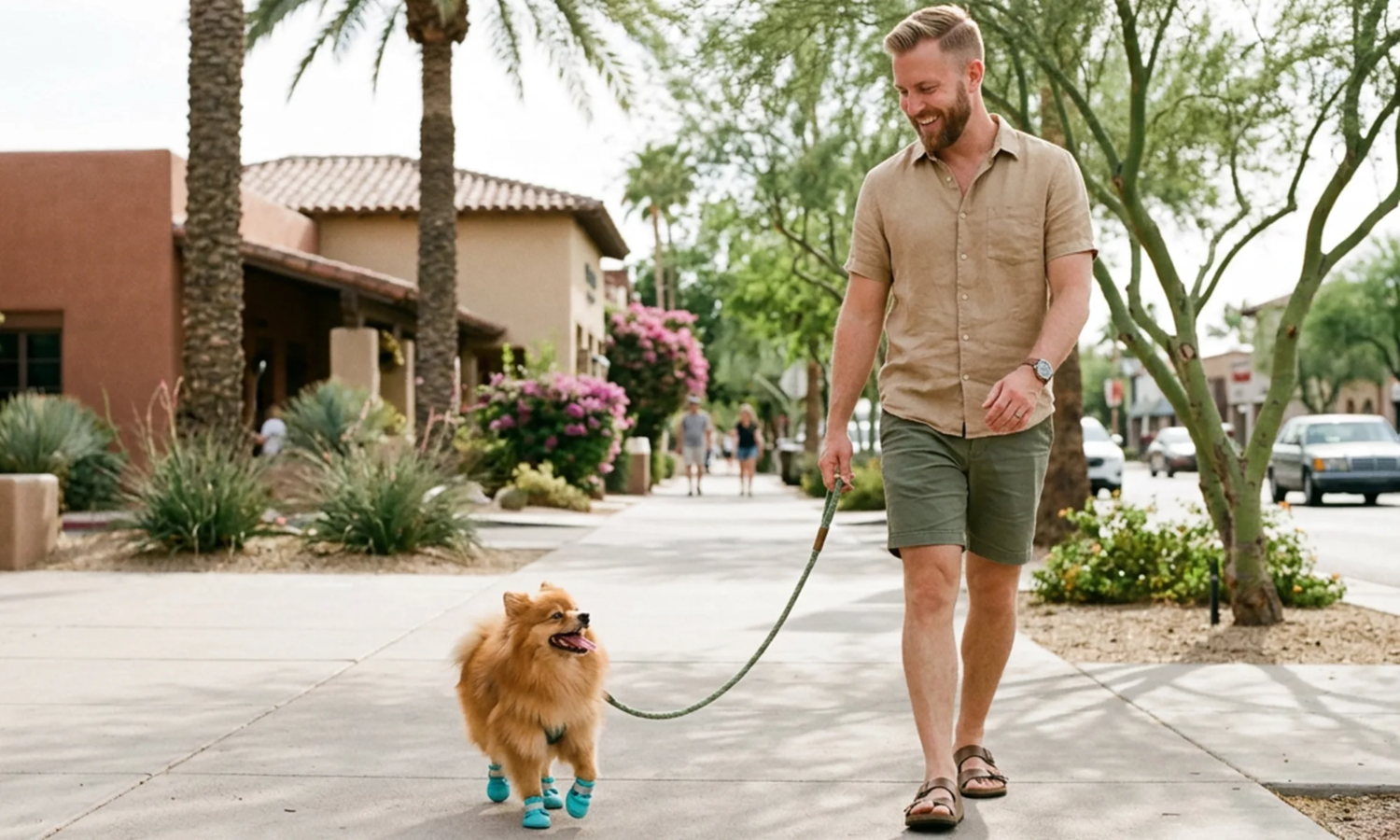
If walks on pavement are absolutely necessary, the Maricopa County Pet Heat Safety Guidelines recommend restricting activity to the coolest windows of the day. Walks should ideally occur between 4:30 AM and 7:00 AM when the surfaces have had all night to dump their heat. If you must traverse paved areas during daytime hours, invest in high-quality, breathable dog boots utilizing rugged reflective soles. Alternatively, restrict all elimination breaks strictly to natural, shaded grass patches or well-saturated soil areas.
Recognizing and Responding to Canine Heatstroke
Unlike humans, who possess millions of sweat glands distributed across their skin to facilitate evaporative cooling, dogs regulate their core body temperature almost exclusively through rapid panting and a minimal amount of sweat production through their paw pads. When the surrounding air temperature matches or exceeds a dog’s natural body temperature, panting loses its cooling efficiency, causing the animal’s internal temperature to climb dangerously fast.
Early warning signs of distress include loud, uncontrollable, rapid panting, bright red or dry gums, thick, ropey drool, glazed eyes, and extreme lethargy. Advanced emergency criteria include a loss of physical coordination, vomiting, bloody diarrhea, or sudden collapse.
If you witness any of these warning signs, you must treat the situation as a life-threatening medical emergency. Immediate treatment steps require rapid but controlled cooling. Instantly remove the animal from the hot environment into a heavily air-conditioned building or deep vehicle shade. Offer fresh, cool water, but never force the animal to drink, as this can lead to accidental aspiration.
You should apply cool or tepid wet towels over the dog’s belly, groin area, armpits, and paw pads. Never submerge an overheated dog in ice water or rub them down with ice cubes. This causes rapid constriction of the peripheral blood vessels, effectively trapping heat inside the core organs and triggering systemic neurological shock. Transport the pet immediately to a 24-hour emergency veterinary hospital for professional fluid therapy and internal monitoring.
Hyper-Local Legal Realities: Maricopa County Ordinances
Handling a pet safely in the Phoenix metro area also carries distinct legal obligations that fluctuate with the weather. Because heat-related pet mortality rates remain a critical concern locally, city and county municipalities enforce strict codes to protect animals from negligent exposure.
First, it is crucial to know that the City of Phoenix enforces a strict Seasonal Trail Ban. The Phoenix Parks and Recreation Department legally closes hiking trails to dogs when temperatures reach 100 degrees and above because of the extreme risks of heat stroke and pavement burns. Violating this policy under Phoenix City Code is a Class One Misdemeanor that can carry significant financial penalties and potential jail time, as mountain rescues put both the animal and emergency responders at severe risk.
Second, the Phoenix City Council passed crucial updates to its Animal Cruelty Ordinance to dramatically strengthen local tethering and restraint rules. Under the updated law, it is entirely unlawful to confine or tie up a dog using a tether, chain, trolley, or similar device unless the dog is under the direct, continuous visual supervision of its owner or handler. Furthermore, dogs cannot be restrained outside at all during extreme weather events, which explicitly includes any day where the temperature climbs above 100 degrees, heat advisories, dust storms, or active monsoons. Animals must have direct access to a fully indoor, climate-controlled living space running reliable air conditioning or cooling.
Valley Wildlife Concerns: Monsoon Intersections
The July and August calendar directly coincides with Arizona’s active monsoon season. The sudden influx of humidity, thunder, and localized downpours triggers an uptick in activity among native desert wildlife, presenting secondary safety hazards for backyard pets.
The most notable threat comes from the Sonoran Desert Toad. Emerging from underground burrows immediately following heavy evening monsoon rains, these large, slow-moving toads secrete a highly toxic, milky white fluid from their parotoid glands when agitated or bitten by a curious dog. If a dog licks or bites a toad, the toxins are rapidly absorbed through the mouth membranes, causing immediate foaming at the mouth, bright red gums, seizures, and potential cardiac arrest. If exposure occurs, owners must immediately use a garden hose to thoroughly rinse the dog’s mouth from the side, ensuring the water runs out of the front of the mouth rather than down the throat, before rushing to a vet.
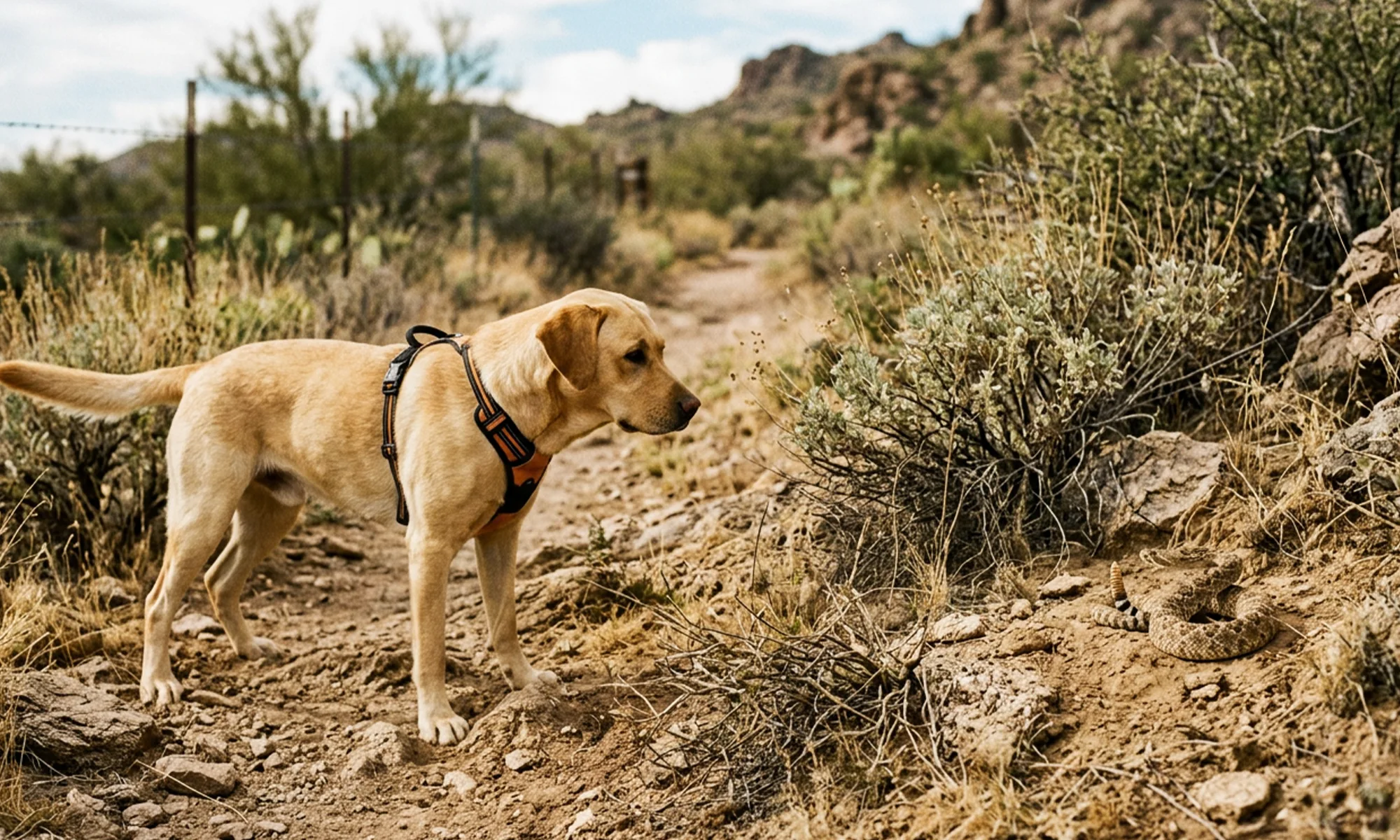
Rattlesnake Aversion Training options in Maricopa County
Additionally, summer downpours often displace local rattlesnakes and urban coyotes, driving them into residential neighborhoods in search of shelter or water. Always inspect your backyard with a flashlight before letting your pets out for a late-night potty break, and never leave small animals unattended on patios or behind standard block walls.
Maximizing Indoor Mental Enrichment
With outdoor activities heavily restricted to the early morning hours, preventing behavioral issues born from boredom becomes a priority for pet owners. When physical exercise options are limited, mental stimulation is an excellent tool to safely drain your dog’s excess energy indoors.
Consider incorporating interactive puzzle toys, food-dispensing snuffle mats, or frozen enrichment treats. Stuffing a durable rubber toy with plain Greek yogurt, dog-safe peanut butter, or unsalted pumpkin puree and freezing it solid provides a mentally engaging, cooling activity that can keep a dog focused for an hour. Dedicating fifteen minutes to indoor clicker training, basic obedience refinement, or nose-work games inside the air conditioning is another fantastic way to strengthen your bond and ensure your pets stay mentally exhausted and physically safe all summer long.
Pet Care Resources
1 – 24-Hour Emergency Veterinary Hospitals in Maricopa County
BluePearl Pet Hospital (Avondale/West Valley): Located at 13034 W. Rancho Santa Fe Dr, Avondale, AZ 85392. They provide comprehensive 24/7 emergency trauma care and specialized veterinary services. Verify hours and contact details on BluePearl Avondale.
VCA Animal Referral and Emergency Center of Arizona (Mesa/East Valley): Located at 1648 N. Country Club Dr, Mesa, AZ 85201. This is a round-the-clock emergency facility handling acute heat stroke cases and critical care. Access triage info on VCA ARECA.
MED Emergency & Specialty Veterinary Hospital (Phoenix): Located at 20610 N. Cave Creek Rd, Phoenix, AZ 85024. A fully staffed 24-hour emergency hospital equipped for complex diagnostics and canine heatstroke stabilization. View resources on VetMED Phoenix.
2. Premium Dog Boot Brands for Extreme Desert Pavement
Ruffwear Grip Trex Dog Boots: Widely considered the gold standard by desert hikers. They feature a rugged Vibram non-marking rubber outsole that provides excellent thermal insulation against asphalt measuring up to 150°F. Shop sizes on Ruffwear.
Muttluks Original Fleece-Lined or All-Weather Boots: Engineered with self-tightening straps and treated leather soles. The all-weather variety acts as a highly durable thermal shield for short urban neighborhood walks. Browse styles on Muttluks.
Kurgo Step & Strobe Dog Boots: These lightweight, breathable mesh boots are designed for hot environments. They feature integrated LED lights in the soles, which add an extra layer of nighttime visibility for late-evening sidewalk walks. Review specifications on Kurgo.
3. Rattlesnake Aversion Training Options in Maricopa County
Partners Dog Training (Cave Creek): They offer specialized rattlesnake avoidance classes using safely contained live rattlesnakes. This training conditions dogs to identify and completely avoid the distinct sight, scent, and sound of venomous pit vipers. Book a session via Partners Dog Training.
Viper Voidance (Phoenix/Scottsdale Mobile): A dedicated team of behaviorists who travel across various open-space parks in Maricopa County to teach dogs immediate aversion techniques. They utilize real desert reptiles to simulate organic backyard encounters. Sign up on Viper Voidance.


