
Guarding the Salt River: The Volunteers Saving Arizona’s Wild Horses
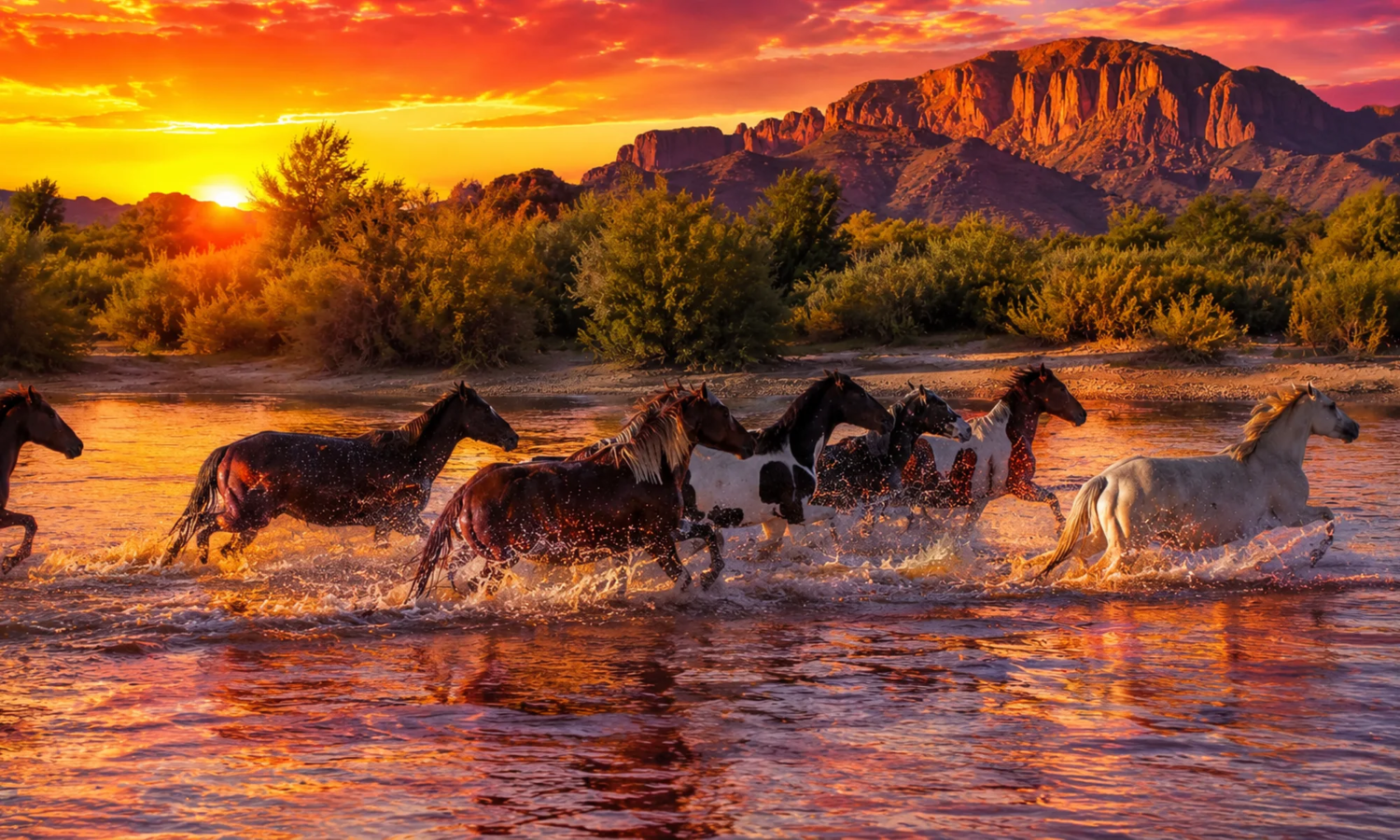
By Taylor Vance
Guarding the Salt River: The Dedicated Volunteers Saving Arizona’s Iconic Herd
The sun rises over the Superstition Mountains like a slow-burning amber flame, casting long, sharp shadows across the Sonoran Desert. At the water’s edge, a thick blanket of morning mist still clings to the Lower Salt River. It is early May in Maricopa County, and while the air carries a fleeting, cool breeze, the impending desert summer looms just over the horizon.
Suddenly, the quiet crackle of a dry mesquite branch breaks the silence. A massive, blue-roan stallion steps gracefully out of the brush, his tangled black mane dust-kissed and wild. Behind him, a mare and a fragile, leggy foal follow closely.
Watching from a respectful distance through binoculars is 62-year-old Mesa resident Elena Rodriguez. She wears a dust-streaked neon vest, a wide-brimmed sun hat, and a badge that reads Salt River Wild Horse Management Group (SRWHMG). For Elena and dozens of local volunteers, this moment marks the beginning of a grueling, high-stakes seasonal shift. As thousands of recreational tubers, kayakers, and tourists prepare to flood the water, the vital work of guarding the Salt River herd officially moves into overdrive.
The Seasonal Tipping Point
May represents a beautiful yet perilous crossroads for the Salt River wild horses. The winter crowds have thinned, but the peak summer rafting season is rapidly heating up. On any given weekend, the Tonto National Forest becomes a bustling hub of human activity. While outdoor recreation boosts local tourism, it introduces significant environmental pressures to a delicate ecosystem.
The Salt River horses are a historic, deeply cherished fixture of the Arizona landscape. DNA tracking and historical records indicate these herds have roamed the region for generations, adapting seamlessly to the harsh realities of the desert. However, adapting to modern human interference is a completely different challenge.
“When the crowds arrive, the horses’ natural behavior changes,” Elena explains, her eyes never leaving the herd. “They are used to the quiet. When hundreds of floating coolers, loud music, and eager tourists crowd the riverbanks, the horses can become disoriented, stressed, or pushed away from their vital watering holes.”
Guarding the Salt River means mitigating these exact human-wildlife conflicts. The volunteer squads operate under a strict, non-invasive philosophy. They are not there to domesticate the herd, but rather to serve as a protective barrier between the wild animals and the well-meaning, yet often uneducated, public.
A Day in the Life of a River Guardian
The operational scale of guarding the Salt River is massive, requiring year-round dedication that peaks during the spring and summer months. Volunteers divide the river territory into distinct zones, monitoring the herd’s movement patterns, checking water levels, and tracking the health of individual animals.
A typical shift for a volunteer like Elena begins at 5:00 AM. Key daily responsibilities include:
- Field Monitoring: Logging herd counts, identifying specific bands (family groups), and noting any signs of injury or illness.
- Public Outreach: Engaging directly with river users at popular staging areas like Phon D Sutton and Granite Reef.
- Safety Patrols: Ensuring tourists maintain the legally mandated 50-foot safety buffer from the horses.
- Hazard Removal: Clearing discarded fishing lines, plastic wrappers, and aluminum cans that pose severe ingestion risks to wildlife.
The educational aspect of the job is often the most critical. “Most people don’t want to hurt the horses,” Elena notes. “They just get excited. They want that perfect smartphone photo. They don’t realize that walking up to a nursing mare can trigger a defensive charge, or cause a spooked foal to injure itself on the rocky terrain.”
The Battle Against Scarcity and Stigma
Beyond managing human crowds, guarding the Salt River involves navigating complex environmental and political waters. The herd exists within a strictly defined territory managed by federal and state agencies. Balancing the preservation of the horses with the conservation of the native desert vegetation requires precision.
One of the most successful initiatives managed by the SRWHMG, in cooperation with the Arizona Department of Agriculture, is the humane fertility control program. By administering PZP (porcine zona pellucida) immunocontraceptive vaccines via field darts, volunteers have successfully stabilized the herd’s population growth. This science-driven approach ensures the horse population remains at a level that the river’s forage can naturally sustain, preventing starvation and minimizing overgrazing.
“Managing the population humanely is the ultimate form of guarding the Salt River,” says Marcus Thompson, a field photographer and conservation biologist who frequently documents the herd. “It proves that community-led, grassroots management can save a wild population without resorting to disruptive federal roundups.”
The Emotional Reward of Modern Stewardship
The work is physically demanding. During the peak afternoon hours, temperatures regularly breach the triple digits. Volunteers hike miles through loose river rocks, navigate thick salt cedar thickets, and carry heavy field equipment.
Yet, for those involved, the emotional reward far outweighs the physical toll. Every volunteer has a specific story, a moment of profound connection that ties them to this desert landscape. For Elena, that connection centers on a 20-year-old stallion known locally as “Cholla.”
“Cholla is a survivor,” Elena says softly as the blue-roan stallion nudges his foal along the river bank. “I’ve watched him defend his band from rivals, navigate severe droughts, and lead his family through chaotic holiday weekends. When you look into the eyes of an animal that resilient, you realize you aren’t just protecting a tourist attraction. You are protecting the living, breathing soul of the Arizona desert.”
As the morning transitions to afternoon, the first wave of kayakers appears around the river bend. Elena steps out onto a prominent gravel bar, her neon vest bright against the green mesquite trees. She smiles, waves to the paddlers, and gently points toward the opposite bank, signaling them to give the drinking horses a wide, respectful berth.
The kayakers gladly comply, drifting quietly past the majestic animals in awe. For another afternoon, the peace is kept, the herd is secure, and the tireless work of guarding the Salt River continues uninterrupted.
How You Can Help Protect the Herd
You do not need a neon vest to play a role in guarding the Salt River. Visitors can actively protect this iconic Arizona treasure by following a few simple guidelines:
- Keep Your Distance: Always maintain a minimum distance of 50 feet (roughly the length of four cars) from any wild horse.
- Never Feed the Wildlife: Human food, carrots, and apples can cause fatal colic in wild horses. Let them forage naturally.
- Pack It In, Pack It Out: Ensure all trash, especially plastic bags and stray straps, is securely tied down and disposed of properly.
- Drive Responsibly: Slow down along Bush Highway, especially during twilight hours when horses frequently cross the pavement to reach the water.


 Image By Robert Leßmann